

Resilience Through Uncertainty
Gold continued to absorb macro headwinds while its long-term trend remained intact.


Quote of the Week
“But even in gold we saw the most famous example in the decade of the stagflation of the ‘70s. We saw gold hit all-time highs from 35 to 850. It was a massive move. But during that decade, there were at least five moments where gold corrected by more than 20%. And halfway through that incredible bull run, there was a massive shakeout between 1974 and ‘76 where gold was cut in half before it went up eight times. So I’m used to seeing bull market shakeouts.” - Matthew Piepenburg
Our Take: History doesn’t move in a straight line, and neither does gold. The 1970s bull market delivered one of the greatest returns in commodity history, but it also tested investors with five separate corrections of more than 20%, including a brutal 50% drawdown before the metal went on to rise eightfold. Corrections aren’t a sign the thesis is broken. They’re a normal feature of every major bull market.
Chart of the Week
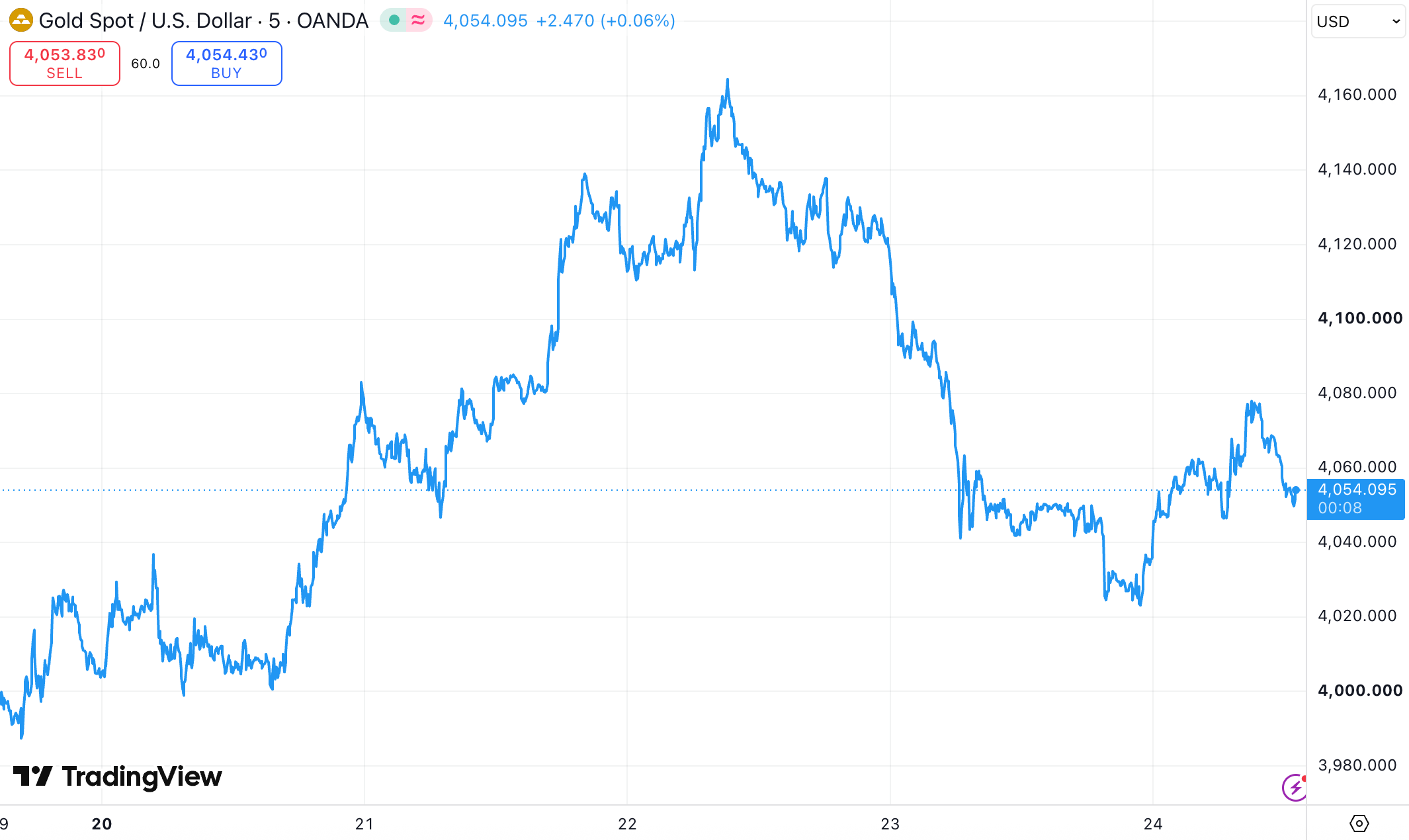
Gold navigated another eventful week as geopolitical tensions, rising oil prices, and shifting interest rate expectations pulled markets in multiple directions. Despite those headwinds, the metal continued to show resilience, holding above the key $4,000 level and finishing the week with its longer-term uptrend intact.
The week began with renewed safe-haven demand, pushing gold back above $4,100 as conflict in the Middle East escalated. Midweek, however, sentiment shifted after Houthi attacks on Saudi oil tankers in the Red Sea sent Brent crude surging 7% to more than $100 a barrel, reviving inflation concerns just as traders were pricing in a more hawkish Federal Reserve. Rising oil prices and higher Treasury yields created pressure across precious metals, but gold once again found support near $4,000.
The market’s reaction this week is a reminder that geopolitical headlines alone aren’t always enough to drive gold higher. Higher oil prices also increase inflation expectations, making the Federal Reserve less likely to ease policy and offsetting some of gold’s traditional safe-haven appeal. Even so, the metal’s ability to absorb those competing forces while continuing to hold key support highlights the resilience of the broader trend.
With the Fed’s July 28–29 meeting now the next major catalyst, volatility is likely to remain elevated. A dovish tone could provide another tailwind for gold, while a hawkish surprise would likely test investor conviction once again. For now, however, buyers continue to step in on weakness, leaving the longer-term outlook constructive.
Gain of the Week
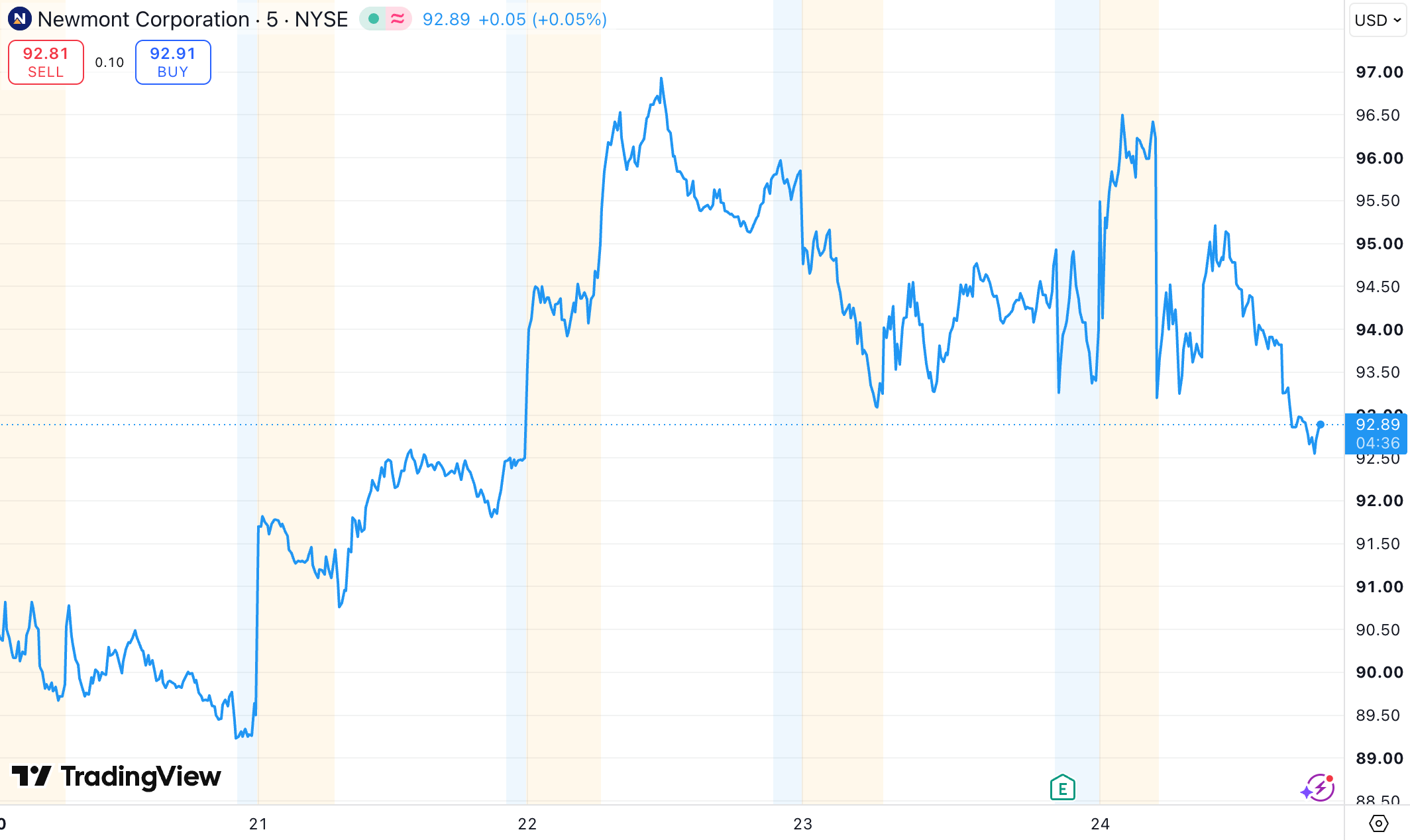
Newmont is up around 3% this week after delivering a strong second quarter on July 23. Two weeks ago, we highlighted the setup heading into earnings: a transition year with 2026 production expected to dip as mines sequence toward higher-grade output in 2027, supported by a fortress balance sheet with $3.2 billion in net cash and a $6 billion buyback authorization. This quarter reinforced that thesis, with strong cash generation helping shift the focus away from near-term production concerns.
Newmont reported adjusted earnings of $2.10 per share, ahead of the $2.05 consensus estimate, on revenue of $6.12 billion, up 15.1% year over year. The company produced roughly 1.3 million attributable gold ounces, 17,000 tonnes of copper, and 7 million ounces of silver, generating a record $2.2 billion in free cash flow and $2.9 billion in operating cash flow. Management returned $1.9 billion to shareholders through dividends and buybacks since the last earnings call, while net cash increased to $3.4 billion.
Operationally, Yanacocha and Lihir outperformed expectations, and the company reaffirmed full-year 2026 guidance, with 51% of production expected in the second half of the year. The Red Chris Block Cave project in British Columbia also continues to advance following recent regulatory approvals, adding another long-term growth driver alongside its core gold business. The primary watch item remains cost inflation, with oil near $100 a barrel expected to pressure fuel and input costs into the third quarter.
Bottom line: Newmont’s results showed that execution continues to outweigh the market’s concerns around its transition year. Production remains on track, free cash flow is setting records, and shareholder returns remain a priority. While higher energy costs are worth monitoring, this was another quarter that strengthened the long-term investment case rather than weakened it.
Honest Question:
What did we miss in the markets this week? What move are you watching that wasn’t in our letter? Let us know in the comments.
Want more weekly insights like this? Subscribe and stay tuned for next week’s edition of the VRIC Media Newsletter.
Disclaimer: This content is for educational purposes only and is not financial advice. Do your own research and consider speaking with a licensed professional.